
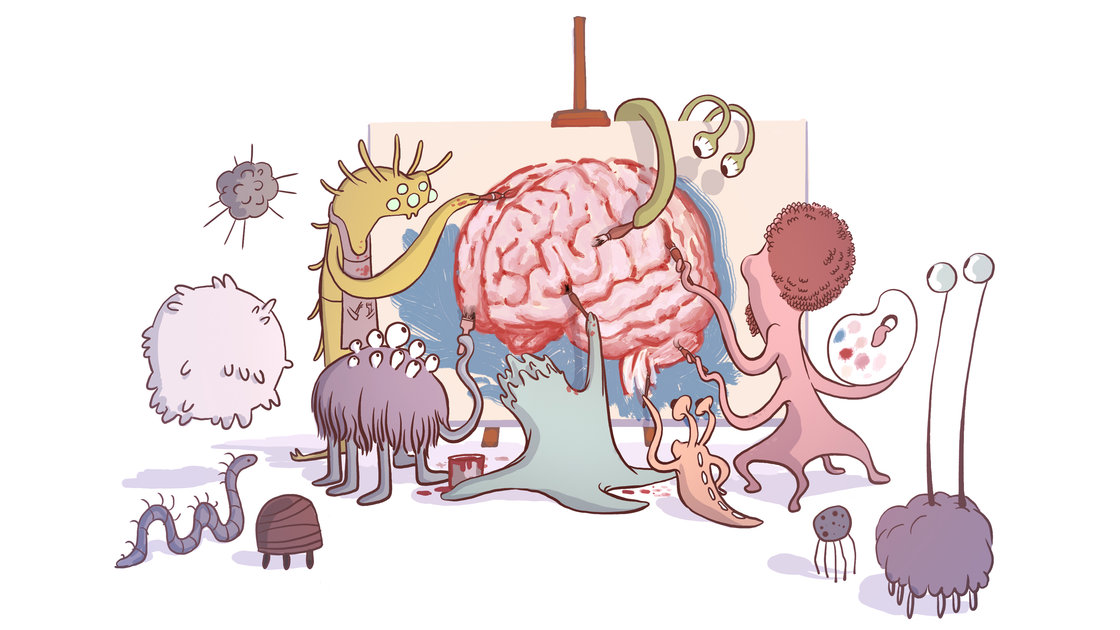
GUT BACTERIA MIGHT GUIDE THE WORKINGS OF OUR MINDS – NPR REPORT
Not all bugs are bad. We are just beginning to understand how the microbes that symbiotically coexist within our Small Intestines contribute to our well-being. The Human Genome Project revealed that humans have approximately 20,000 working genes. It now appears that the gut microbiome contains 5-8 million genes, contributing 36% of the small molecules found in human blood. At present 60% of the molecules identified have unknown functions. As scientists delve deeper into the mysteries of the gut microbiome, links between microbiome imbalances and diseases as diverse as cancer, diabetes, obesity, inflammatory bowel disorder, psoriasis, asthma and possibly even autism have been established. No aspect of our musculoskeletal, visceral, or neurological systems is isolated from the influence of the gut microbiome. Likely, variance in the effectiveness of pharmaceutical products is partially explained by the differences between individuals in their gut microbiome, dimming the hope that all diseases may ultimately be conquered by taking a pill.
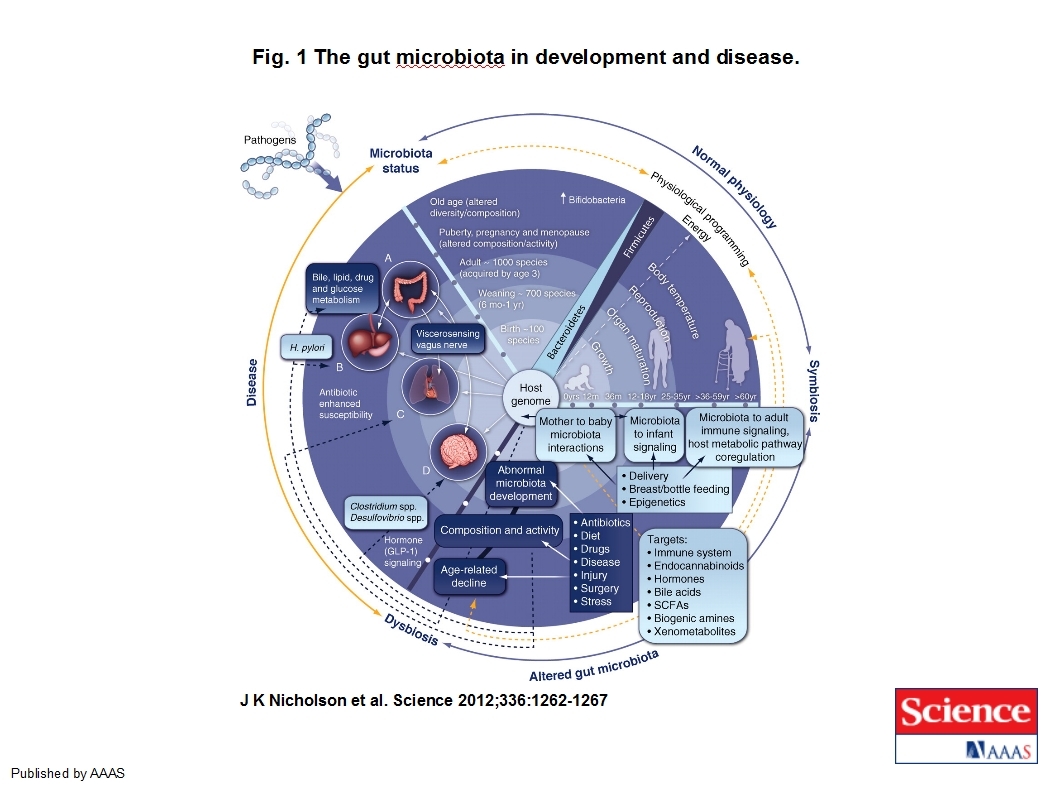
INTRODUCTION TO RESEARCH OVERVIEW IN 6/8/2012 ISSUE OF THE JOURNAL SCIENCE
The gut microbiome is a rapidly evolving area of study, as illustrated in this graphic:
(Click to enlarge the image to view the details)
Prebiotics and probiotics guide the gut microbiome towards an optimal communal relationship. People suffering from allergies, inflammation, weight issues, cognitive fogginess, fatigue, or other diffuse symptoms that don’t have a recognizable origin can simply take on learning to cultivate their gut flora by adding prebiotics to their diet and supplementing with probiotics and notice if and how symptoms change. There are many over-the-counter products to experiment with. For those people experiencing a more severe symptom set, working with a nutritionist experienced in the gut microbiome is highly recommended.
NY TIMES ARTICLE ON THE LINK BETWEEN MICRO-BIOME BALANCE AND AUTO-IMMUNE ISSUES
LINK BETWEEN MICROBIOME AND NEURODEVELOPMENTAL DISORDERS IN MOUSE MODEL
SELECTION OF PAPERS FROM GOOGLE SEARCH ON THE RELATIONSHIP BETWEEN THE GUT MICROBIOME AND ADHD
RESEARCHERS LINK VACCINE EFFECTIVENESS TO GUT BACTERIA
ANTIBIOTICS THAT KILL GUT BACTERIA ALSO STOP THE GROWTH OF NEW BRAIN CELLS