Assess Reflex Development Across Five Neurological Systems
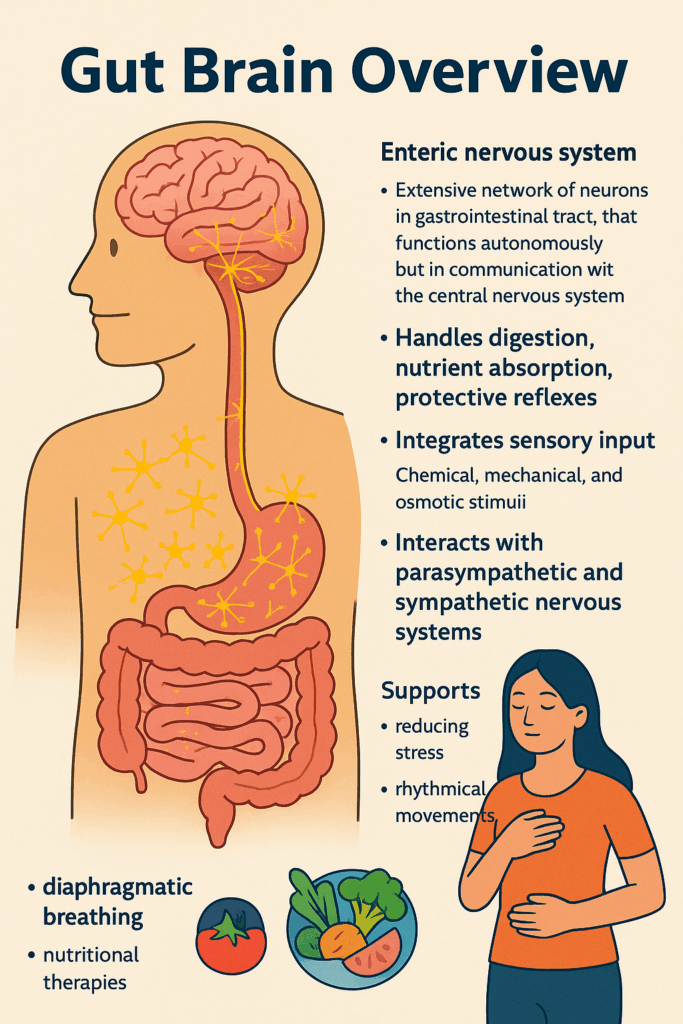
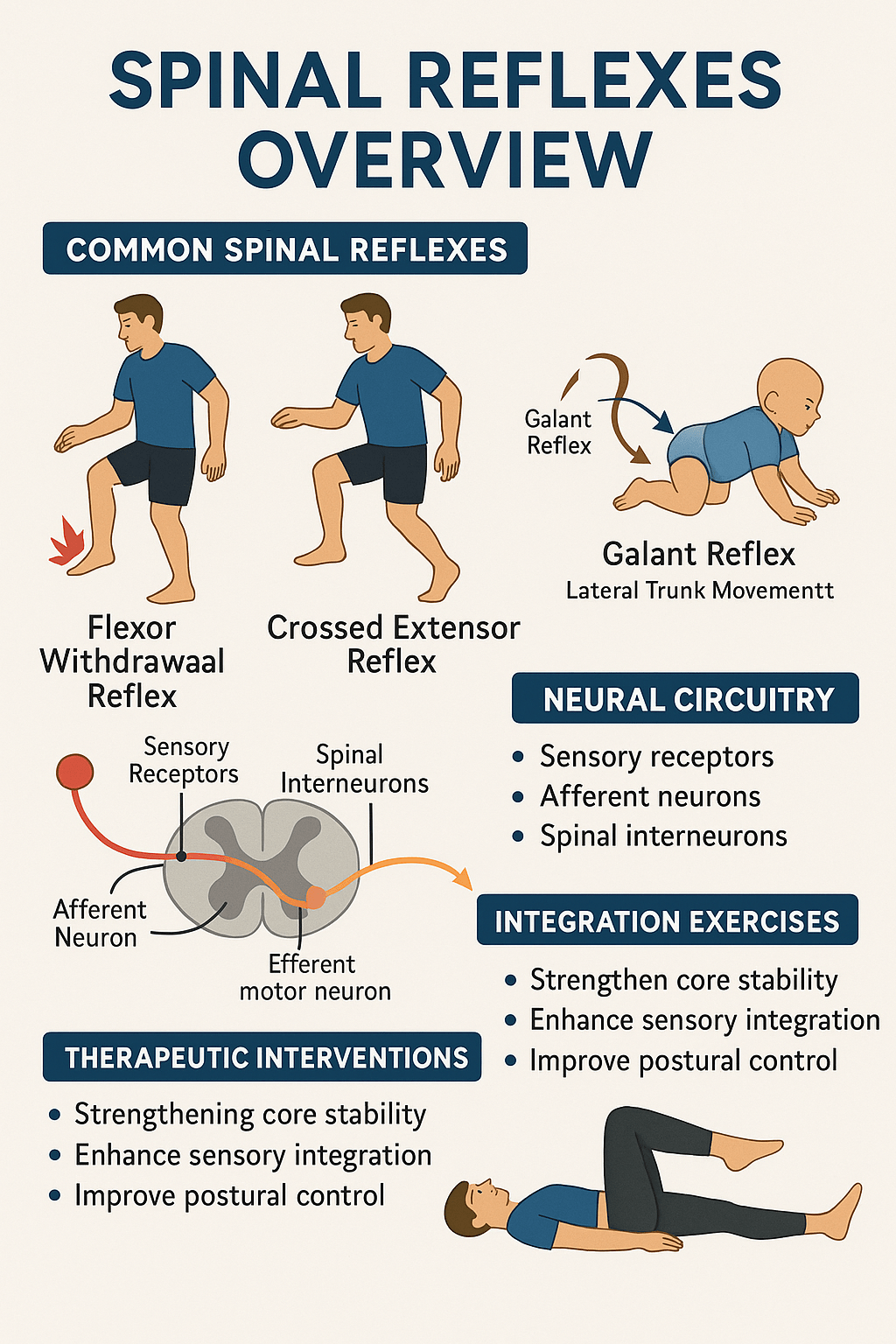
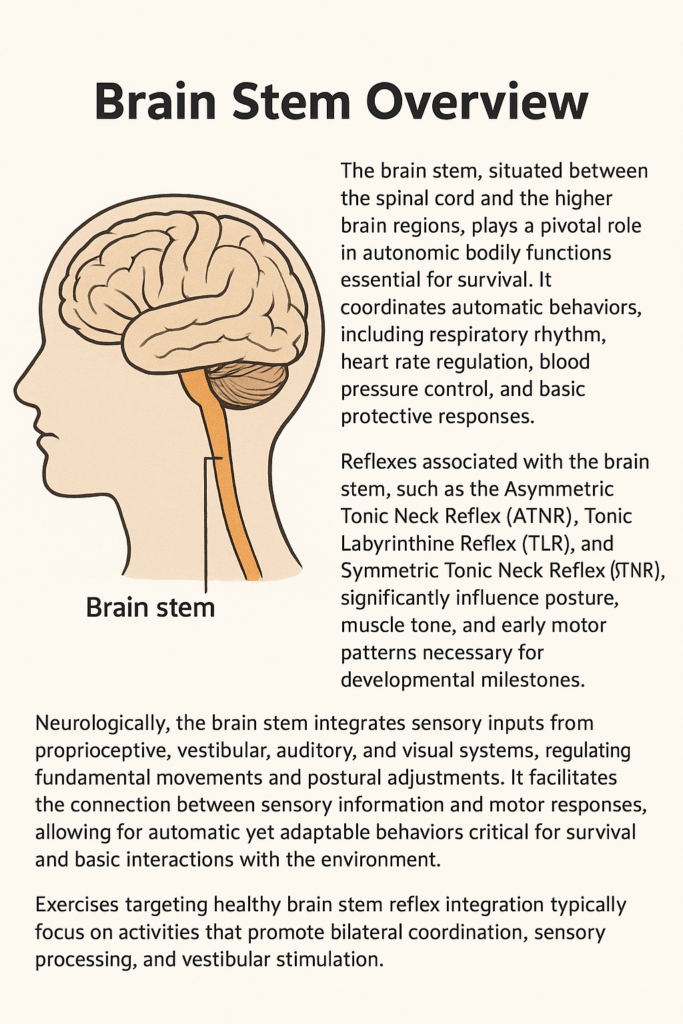
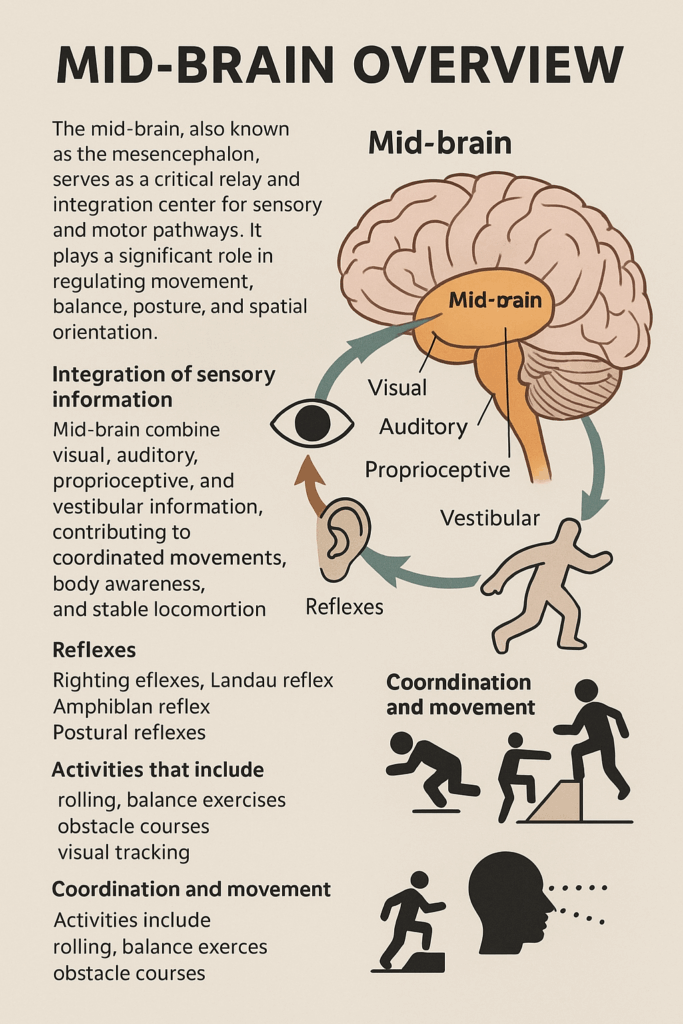
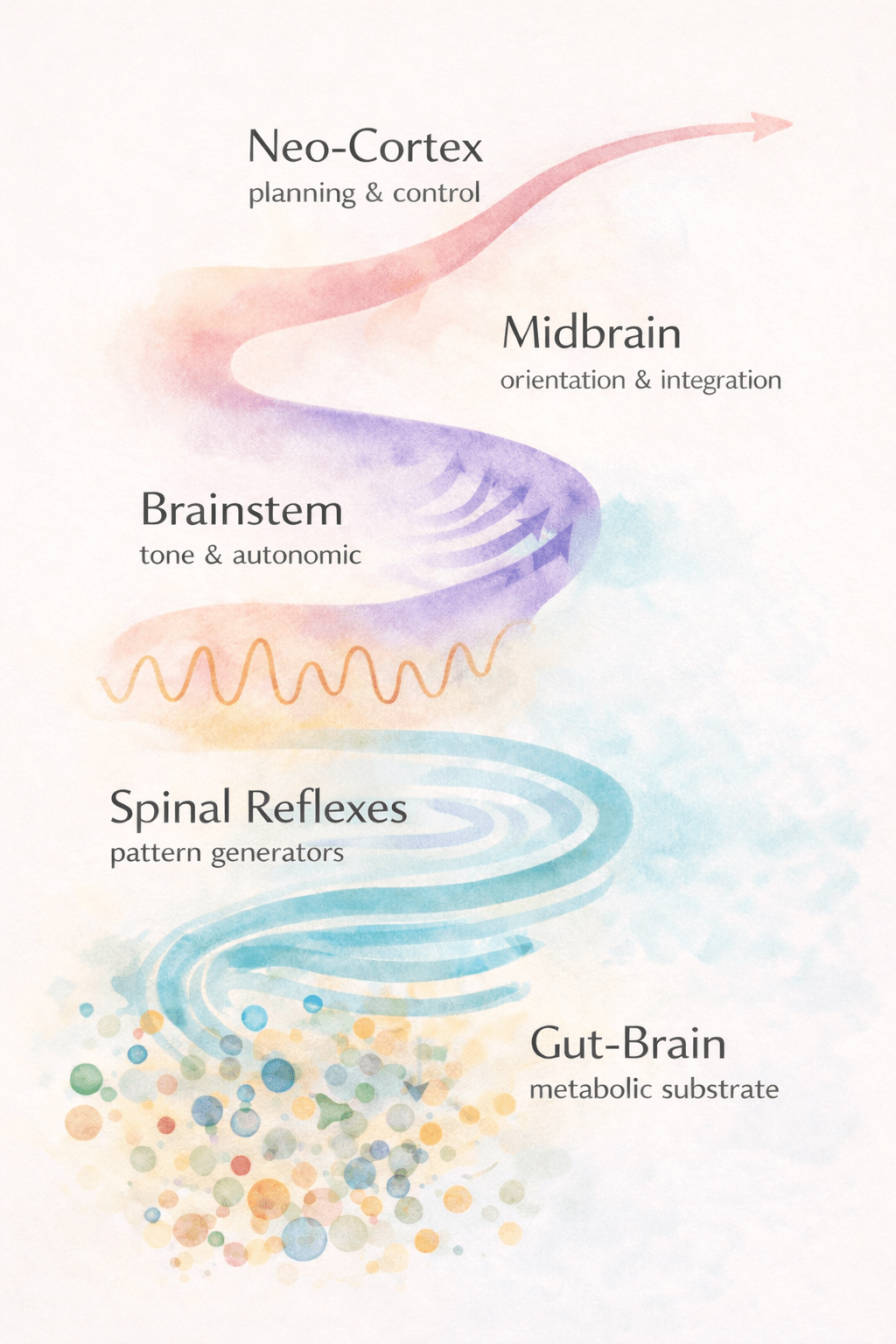
This ~120-question developmental reflex assessment looks at how your nervous system functions in everyday life. Questions are grouped into familiar experience categories—Physical, Movement, Sensory Processing, Behavioral, and Cognitive—while the results map those patterns to five neurological layers: Gut-Brain, Spinal Reflexes, Brainstem, Midbrain, and Neo-Cortex.
This is not a medical diagnosis, but a functional pattern analysis showing where regulation is working smoothly and where it may need support.
Your report includes clear explanations, targeted exercises, and practical guidance to support improved movement, sensory integration, emotional regulation, and clarity of thinking.
THE SURVEY
This survey consists of ~120 quick-answer questions and typically takes no more than 20 minutes to complete. You can do this survey for yourself, another adult, or a child.
Your responses generate a profile of how well five key neuromotor “layers” are working together:
At the end of the survey, you’ll see the significance of each layer to your physical, movement, sensory processing, behavioral, and cognitive functions as a percentage, with a link to a PDF discussing that layer, including exercises, activities, and therapeutic tactics. Click on the graphic for a downloadable PDF report on the selected layer.
How to read your results
The layer with the highest score is the primary focus for training.
If two layers score almost the same, divide your attention between them—working on one will usually help the other.
Privacy
No data or identifying information is stored in this code. If you close or refresh this page, all data is dropped. No cookies or AI APIs are used.
It is important to take note of the results as they will be lost when the page is closed.
There is a simple question/answer AI chatbot fine-tuned on these reflex correlations to try if you would like to explore the potential of this material before jumping into the survey:
REFLEX CHATBOT
Skip irrelevant questions. 1 = never, 5 = always.
Movement Assessment
Reports
Click on the graphic for the associated written report.